What AI can systematise that humans should not have to carry alone
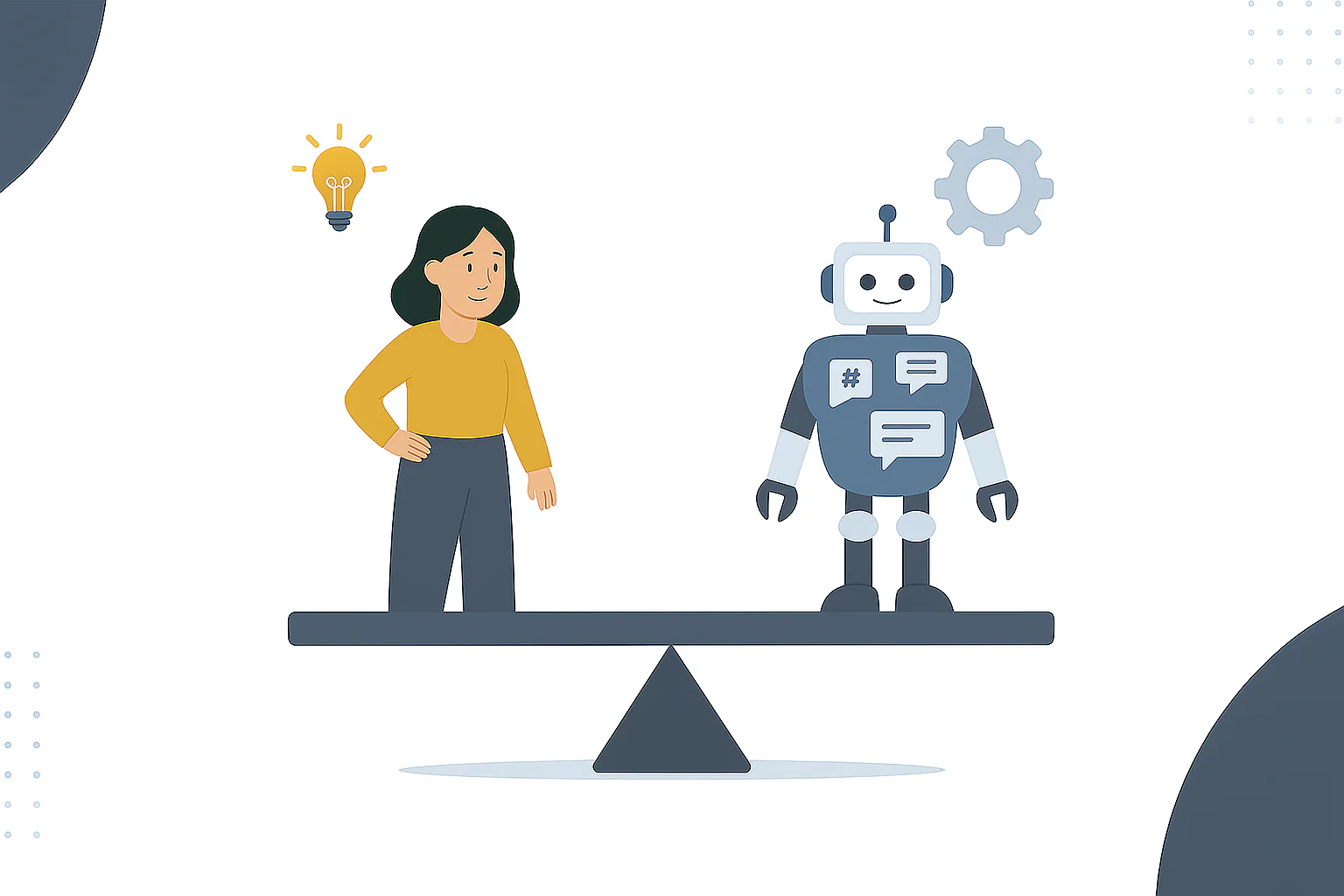
AI is often described as if it is competing with humans. That framing is not very useful for most businesses.
The better question is not “what can AI do that humans cannot?” It is “what can AI systematise so humans can focus on the work that needs judgement, care and context?”
For practical digital systems, three strengths matter most: consistency, memory and scale. These are not reasons to hand everything over to AI. They are reasons to design better workflows, where AI carries repeatable load and people keep ownership of meaning, relationships and decisions.
That is the basis of Human-Engineered Digital Systems. AI is useful when it supports access, engagement and momentum. It is risky when it is treated as a replacement for human responsibility.
1. AI can support consistency
Humans are not machines, and that is a good thing. People bring nuance, empathy, judgement and imagination. But humans also get tired, distracted and overloaded. In marketing and digital operations, that can lead to inconsistent communication, missed follow-ups, uneven formatting, forgotten CTAs, and content that changes style depending on who had time to write it.
AI can help by applying agreed patterns repeatedly. It can check whether a post includes the right call to action. It can draft metadata in a consistent format. It can adapt one approved message into several channel-specific versions. It can help maintain tone guidance across blogs, emails and social posts.
That does not mean AI should decide the tone by itself. The human still defines the voice, audience and boundaries. AI helps apply those decisions more consistently.
Where consistency helps
- Turning blog ideas into repeatable content structures.
- Creating first drafts that follow brand and formatting rules.
- Keeping CTAs aligned across website, email and social content.
- Checking whether common details have been missed.
- Reducing the amount of repetitive editing needed before review.
Consistency is especially helpful when a business is growing or when more than one person contributes to marketing. It gives the team a shared way of working without flattening every message into the same voice.
What humans must still own
Consistency can become a weakness if it turns into sameness. Sometimes the right thing is to change tone, pause a campaign, rewrite a message completely, or avoid publishing something that is technically “on brand” but not appropriate.
Humans own those calls. AI can identify patterns, but people understand context.
2. AI can support memory
Digital work creates a lot of context. Previous posts, audience questions, product notes, web pages, search terms, campaign themes, meeting notes, drafts, feedback and positioning decisions all affect what should happen next.
Humans can remember the important shape of things, but it is easy for details to get lost. AI-supported systems can help keep useful context available so you are not rebuilding from scratch every time.
This kind of memory does not have to mean anything dramatic. It can be as simple as maintaining a content brief, a reusable brand guide, a list of approved phrases, a record of common customer questions, or a workflow that pulls the right information into the right stage.
Where memory helps
- Keeping a record of audience segments and what they care about.
- Reusing approved explanations of services or offers.
- Connecting older blog content to newer website priorities.
- Remembering which claims should not be made without evidence.
- Spotting opportunities to update or repurpose existing assets.
Memory is one of the reasons AI can support SEO visibility. If your content system tracks topics, pages and gaps, it becomes easier to improve the website over time instead of publishing isolated pieces that never connect.
What humans must still own
Memory is only useful if the stored context is accurate and relevant. AI can retrieve or reuse information, but a person needs to decide what belongs in the system, what has changed, and what should be removed.
Outdated positioning, old service descriptions or unsupported claims can spread quickly if they are baked into a workflow. Human review keeps the system honest.
3. AI can support scale
Scale does not have to mean huge volume. For many small businesses and specialist teams, scale simply means being able to keep up.
Can you turn one useful idea into a blog, three posts and an email without losing half a day? Can you respond to recurring questions without writing the same explanation from scratch? Can you maintain visibility while still doing the client work? Can you follow up with people in a way that feels organised rather than frantic?
AI can help create that capacity. It can draft variations, summarise long notes, organise messy input, generate outlines, prepare content calendars, and help transform existing expertise into usable assets.
Where scale helps
- Repurposing one core idea into multiple formats.
- Creating first-pass drafts for review rather than starting from a blank page.
- Supporting email sequences, FAQs and onboarding materials.
- Helping teams maintain regular communication without constant reinvention.
- Making small improvements across many pages or pieces of content.
The value is not simply “more content”. More content is not automatically better. The value is being able to maintain momentum without lowering the quality of the thinking.
What humans must still own
Scale can create noise if it is not controlled. AI makes it easier to produce more, so the human job becomes deciding what is worth producing at all.
That means asking: does this help the right person? Does it connect to a real business goal? Is it accurate? Is it useful? Does it support the next step? If not, the ability to create it quickly is not much of an advantage.
The practical role of AI in digital systems
The strongest AI setups are not built around novelty. They are built around work that happens repeatedly and matters enough to improve.
For example, a practical AI-supported marketing system might include:
- A clear description of your audience and offers.
- A content workflow that moves from idea to brief to draft to review.
- Reusable guidance for tone, claims, CTAs and structure.
- A way to repurpose approved content across channels.
- A review process that checks accuracy, usefulness and next steps.
This is where practical AI setup becomes more valuable than experimenting with random tools. The tool is only useful if it fits the way the business actually works.
Humans are not the bottleneck; unclear systems are
It is easy to assume AI is valuable because humans are slow. I do not think that is the best way to look at it.
Humans are often slowed down by unclear systems: scattered notes, disconnected tools, undefined audiences, inconsistent workflows, and too many repetitive decisions. AI can help carry some of that operational weight, but only when the system has been designed with human judgement at the centre.
So yes, AI can offer consistency, memory and scale. But the real opportunity is not replacing the human. It is building digital systems where the human is no longer carrying every repeated task manually.
If you want to explore that for your own marketing, website or content workflow, start with a conversation. The goal is simple: better systems, clearer communication, and more sustainable momentum.
Explore free guides, checklists and templates