Human-engineered digital systems: systems engineering, human factors, and artificial intelligence
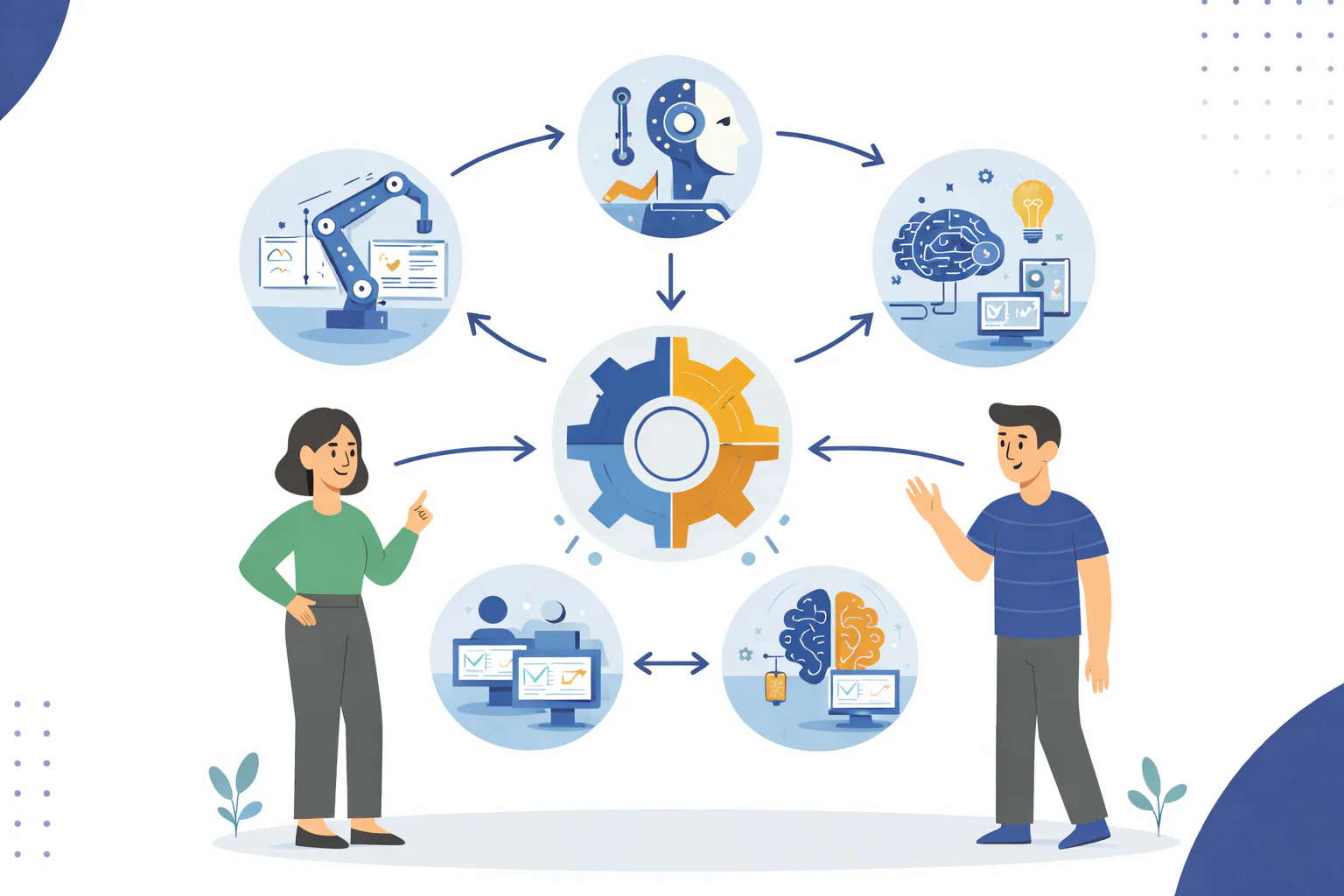
Human-engineered digital systems bring systems engineering, human factors science, mechanical engineering principles, and artificial intelligence into one coherent architecture.
That matters because information technology, energy, health, and autonomous systems now depend on connected decisions, not isolated tools.
When engineering, users, data, and governance are designed separately, organisations face integration failures, misaligned user needs, poor decision making, and AI behaviour no one can confidently control.
Human-engineered systems connect technical performance with human values, operator expertise and real-world constraints.
Digital transformation only matters when it helps people make better decisions, keeps services reliable and protects the wider social context around the technology.
If you are designing, commissioning or improving a digital system, this guide gives you a structured way to include modelling, AI adoption and human-centred engineering from the outset.
It is especially important to assess risks and responsibilities before adding AI to your workflow, not after the system is already embedded.
Overview of digital systems, digital transformation and AI governance
Digital transformation now spans websites, enterprise platforms, digital twins and AI-enabled services.
If your organisation relies on modelling tools or data-driven decision making, the system has to support operational efficiency, sustainability goals and cost control without losing sight of the people using it.
Successful transformation programmes align stakeholders across engineering, operations, compliance, and executive leadership. Phases must be clearly time-boxed, with defined ownership and measurable outcomes.
Without structured alignment, transformation efforts drift, increasing risk and reducing confidence across teams.
As digital systems become more automated, governance has to move closer to the work itself.
A content approval workflow, for example, should define who reviews AI-assisted drafts, which risks trigger escalation, and how final decisions are recorded before anything goes live.
Systems engineering foundations for human-engineered digital systems
Classical systems engineering provides the backbone for integration across mechanical engineering, software systems, and AI components.
Key foundations include the artefacts that keep a complex digital system testable, auditable and accountable:
- Clear system requirements aligned with user needs and regulatory compliance
- Explicit acceptance criteria linked to verification artefacts
- Architecture views covering hardware, software, and information flows
- Defined interfaces and integration responsibilities
- Traceability between requirements, modelling assumptions, tests, and operational constraints
A digital twin is a virtual model of a real asset, process, or service that stays connected to real-world data. Instead of being a static diagram, it helps you test how a building, energy system, workflow, or service might behave before you change the live environment.
In human-engineered digital systems, digital twins and simulation models make risk easier to see. They help teams test performance, resilience, and failure scenarios before deployment, while verification artefacts give assurance teams measurable evidence to review.
Researchers and university programmes continue to improve the reliability, evaluation, and governance methods behind this work.
That academic progress matters because industrial teams need evidence they can trust before they adopt AI-enabled systems in safety-critical or regulated environments.
Human factors integration in digital systems
Human factors engineering ensures that systems support operators rather than burden them.
This includes:
- User task analysis
- Cognitive walkthroughs
- Ergonomics assessment
- Accessibility validation
- Usability testing under realistic operational conditions
In sectors such as health and energy, failure to integrate human factors can have serious societal impact. Human reliability analysis helps organisations anticipate consequences of error and design mitigation strategies.
Effective systems focus on how workers interact with technology, not simply how technology performs in isolation.
Software engineering practices for human-engineered digital systems
Software architecture must be modular, maintainable, and auditable. Continuous integration, automated testing, and static analysis improve reliability and support compliance with industry regulations.
Modern information technology environments require:
- Automated unit and integration tests
- Code review gates
- Secure deployment pipelines
- Monitoring tools to detect anomalies
Modular architecture, review gates, and observable deployment pipelines increase confidence in system performance and reduce long-term maintenance cost.
Artificial intelligence design and human-in-the-loop considerations
AI integration must be deliberate. High-value use cases should be identified through structured analysis of operational needs and decision-making processes.
Human-in-the-loop design requires:
- Interpretability features
- Clear override and escalation pathways
- Monitoring for model drift
- Periodic validation against real-world data
In autonomous systems, human oversight remains critical to ensure resilience and compliance with emerging regulations in the UK and internationally.
AI systems should support human expertise rather than remove human ownership.
In practice, augmented intelligence means decision support with clear review points, escalation paths, and monitoring for known failure modes.
Automation should only expand where the risks are understood, measured, and actively managed.
Risk, safety, and assurance for digital systems
Risk management must be built in when you create and implement a new digital system. This includes:
- Hazard analysis
- Failure-mode assessment
- Human reliability analysis
- Development of safety cases and assurance artefacts
- Independent verification and validation
Hazard analysis, failure-mode assessment, human reliability analysis, safety cases and independent validation give regulated organisations a structured route to safer delivery.
Compliance has to be built into the system from design through deployment, with evidence available for review when decisions are challenged.
Metrics, evaluation, and continuous improvement
Operational KPIs must align with both technical performance and human-centred outcomes.
Systems should collect telemetry that shows what is happening in the system, including performance, user behaviour, energy use, error rates and resilience under stress:
- Performance
- User interaction
- Energy efficiency
- Error rates
- Resilience under stress
Periodic reviews ensure alignment with evolving user needs and organisational objectives. Continuous improvement requires both data analysis and practitioner feedback.
Implementation roadmap and change management
Digital system adoption succeeds when phased deployment is supported by structured change management.
Effective programmes include:
- Pilot deployments
- Role-based training
- Clear governance frameworks
- Feedback channels for frontline workers
- Quarterly policy review
You need to align transformation objectives with sustainability goals, cost constraints, and workforce capability.
Example case study patterns: systems engineering, human factors and AI applied
Documenting representative projects strengthens institutional knowledge. Examples may include:
- AI-assisted maintenance systems supported by digital twins
- Health service platforms integrating human factors modelling
- Energy management systems optimised through predictive AI
Extracting replicable lessons builds organisational expertise and supports wider adoption across sectors.
What human-engineered digital systems look like in real digital work
In practice, human-engineered digital systems show up in three familiar places. A website refresh can improve clarity and conversion without harming search visibility. An AI setup can keep human review, governance, and workflow control in place. A structured content system can help execution while people still shape standards, intent, and final decisions.
The point is better system design around people, risk, and outcomes. If you are exploring a more resilient workflow, start with website refresh, AI setup support, or a structured content route through HelixScribe.
What's next for human-engineered digital systems
Human-engineered digital systems represent the next stage of digital transformation: not more tools, but better-designed relationships between people, models, controls, and decisions. A customer support triage system makes the difference clear.
If AI only routes tickets faster, mistakes scale faster too.
If the workflow includes confidence thresholds, hand-off rules, operator feedback, and review of recurring failure patterns, the same AI becomes part of a safer service system.
By integrating systems engineering, human factors, mechanical engineering principles, and artificial intelligence within a structured framework, you can create more efficient, resilient, and compliant digital services.
The focus is alignment between modelling, operators, regulations and human values. When designed with discipline, human-engineered digital systems can improve reliability, support safer decisions and make complex services easier to manage over time.
This is the reasoning behind how we set systems up. Human-engineered AI is the shorter, practical version of it, combining human review with AI automation covers where the checks actually sit, and our research on production AI reliability covers what happens to a system when they are missing.
Explore free guides, checklists and templates