Top 5 AI-enabled digital tools to reach the right people
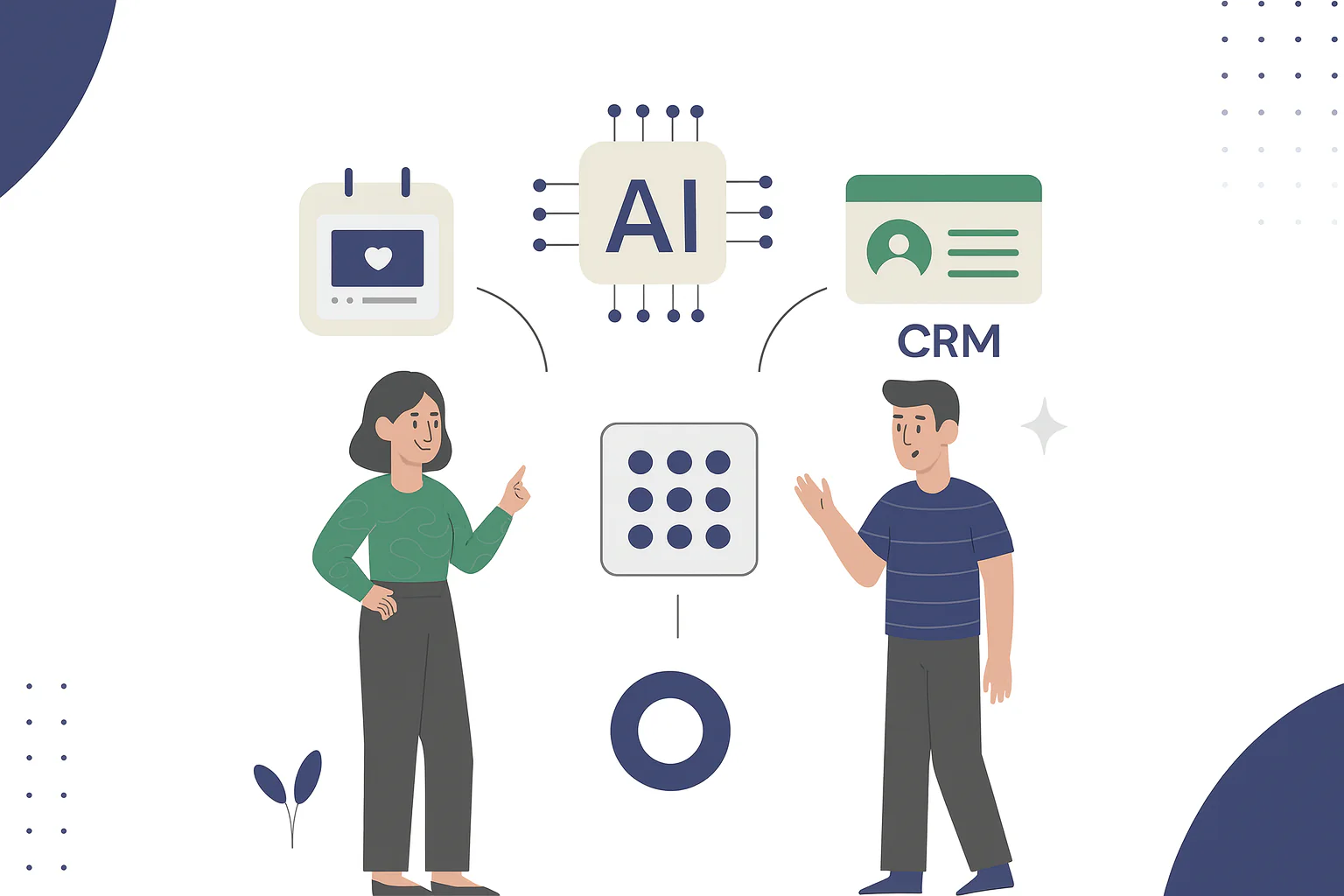
AI-enabled tools are useful, but only when they work together.
A stack of disconnected apps can create more noise, more admin and more places for follow-up to disappear.
The best stack is designed around the journey you want people to take: find you, understand what you offer, hear from you at the right moment, and take the next step with less friction.
For Claire Nicholson Digital, that is the practical value of Human-Engineered Digital Systems. AI can support visibility, communication and follow-up, but the human design decides how the pieces connect.
Here are five types of AI-enabled digital tools that can help you reach the right people when they are designed as one stack rather than treated as separate shortcuts.
Start with the system, not the software
Before choosing tools, map the journey. How does someone first discover you? What page or piece of content helps them understand your offer? How do they stay in touch? What happens after they enquire? Where do you lose momentum?
Those questions matter because the best tool for one business may be unnecessary for another.
A simple, well-connected system often beats a complicated stack with impressive features nobody uses.
A useful stack usually supports three things:
- Access: making your expertise easier to find and understand.
- Engagement: helping people interact with useful content and clear next steps.
- Momentum: reducing the friction between interest, follow-up and action.
With that in mind, the following tools are less about individual platforms and more about roles in the system.
Tool 1: Website and SEO visibility tools
Your website should be the foundation of the stack. Social platforms, AI tools and email campaigns are useful, but your website is where your positioning, services and next steps should become clear.
AI-enabled SEO and website tools can help identify content gaps, improve metadata, structure pages, summarise search themes, and prioritise updates. They can also help translate messy ideas into clearer page briefs.
The important point is that SEO is not just keyword placement. Your pages should make the right information easy for the right people to find, understand and act on. A service page, blog post or resource should help someone decide whether you can help, why your approach matters, and what to do next.
For example, a visibility workflow might include reviewing search queries, identifying pages that need clearer explanations, updating internal links, improving titles and descriptions, then turning those improvements into supporting social or email content.
If visibility is a priority, connect this layer to a broader SEO visibility process rather than treating it as a one-off optimisation task.
Tool 2: Content creation and repurposing tools
Content tools are often where businesses first experiment with AI. They can be useful, but they work best when they are fed by a clear content strategy.
A tool like HelixScribe fits into this part of the stack by helping turn ideas into blogs, posts, emails and other marketing assets. The goal is not to replace the human voice. It is to reduce friction so useful ideas can become publishable content more consistently.
Good content tools should help you:
- Capture raw ideas before they disappear.
- Structure those ideas for different audiences.
- Create first drafts from a clear brief.
- Repurpose approved content across channels.
- Keep CTAs and positioning aligned.
Content becomes much more powerful when it connects back to the website.
A blog can support a service page.
A social post can drive people to a clearer explanation.
An email can bring someone back to a useful resource.
The tool should support that loop.
Tool 3: CRM and audience management tools
Reaching the right people also means keeping track of the people who have already shown interest. A good CRM helps you see who enquired, what they asked about, when they last heard from you, and what would be useful to send next.
A customer relationship management system, or CRM, gives structure to that process. AI-enabled CRMs can help segment contacts, summarise interactions, suggest follow-up tasks, and identify where conversations may be going quiet.
For small businesses, the CRM does not need to be over-engineered. It needs to be clear enough that enquiries, prospects, collaborators and clients do not live only in someone’s inbox or memory.
The human part is deciding what relationship stages matter. For example: new enquiry, discovery call booked, proposal sent, follow-up needed, active client, past client, newsletter subscriber.
AI can help with organisation and reminders, but the relationship strategy is still human.
Tool 4: Email and marketing automation tools
Email remains one of the most useful ways to maintain momentum because it is not fully dependent on social algorithms. AI can help draft sequences, personalise messages, summarise audience segments and suggest subject lines, but automation should still feel considered.
The best email workflows are based on real user needs. Someone who downloaded a guide may need a different next step from someone who attended an event or asked about a service. AI can help manage those variations, but the journey should be designed intentionally.
A practical email layer might include:
- A welcome sequence that explains what you do and who you help.
- Follow-up emails after enquiries or calls.
- Regular useful updates that link back to website content.
- Segmented messages for different services or audience groups.
This is where communication and follow-up become part of the same system. People should not have to work hard to understand what comes next.
Tool 5: Analytics, insight and reporting tools
Analytics tools help you see whether the system is working. AI can make that easier by summarising data, spotting patterns, grouping search queries, highlighting content opportunities, and turning reports into practical next actions.
But analytics only helps if you know what you are looking for. Vanity metrics can distract from the real question: are the right people finding, understanding and acting on your content?
Useful signals might include:
- Which pages attract relevant search impressions.
- Which content supports enquiries or newsletter sign-ups.
- Which emails get clicks to useful next steps.
- Which social posts create meaningful conversations.
- Where people drop out of the journey.
Insight tools should feed back into the rest of the stack. If analytics shows a page is getting impressions but few clicks, improve the title and description. If a blog is useful but isolated, add internal links. If enquiries ask the same question repeatedly, create content that answers it earlier.
How AI marketing tools, SEO, CRM and email work together
The real value appears when these tools connect.
- SEO and website tools help people find clear, useful pages.
- Content tools turn expertise into blogs, posts and emails.
- CRM tools remember who is engaging and what they may need next.
- Email tools maintain communication and follow-up.
- Analytics tools show what to improve.
That loop creates momentum. Each tool has a role, and each role supports the next one. The system becomes easier to maintain because information flows instead of getting trapped in separate places.
Choose tools you can actually operate
A tool is only good if it fits your capacity. If it requires constant manual clean-up, unclear decisions or workflows nobody follows, it will not help for long.
Start with the simplest version of the system. Make the website clear. Create a repeatable content workflow. Keep track of contacts. Send useful follow-ups. Review what is working. Then add automation where it genuinely reduces friction.
If you want help designing a practical AI-enabled stack, explore AI and digital systems support or get in touch. The useful outcome is a connected system that helps the right people reach you, understand you and keep moving once they do.
Explore free guides, checklists and templates